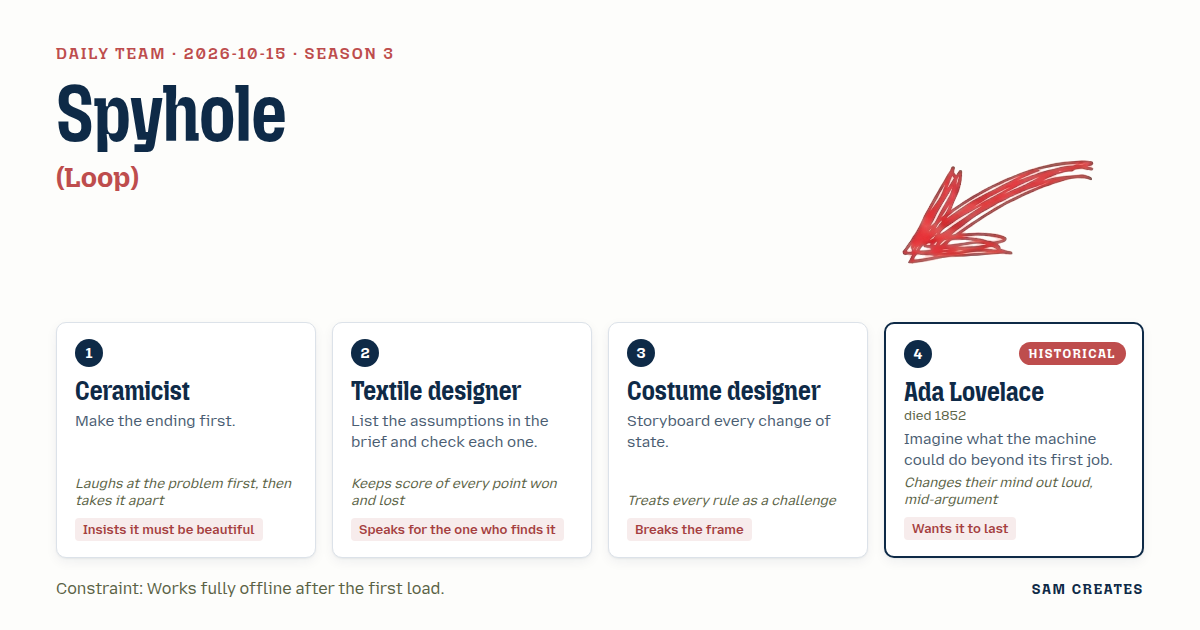
Loop: Claude Code waking on a schedule to check on something again and again.
1CeramicistSpyhole
Ha. A machine that keeps getting up to check the oven. That's every potter at 3 a.m.
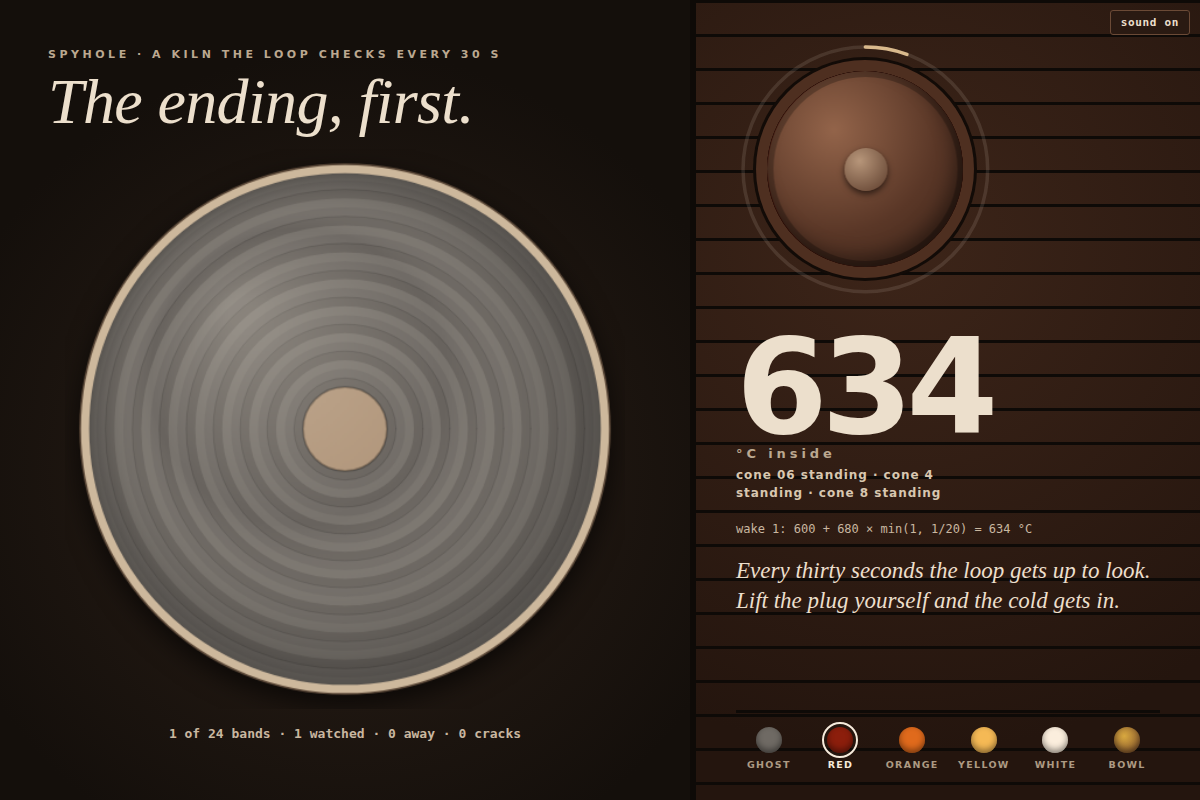
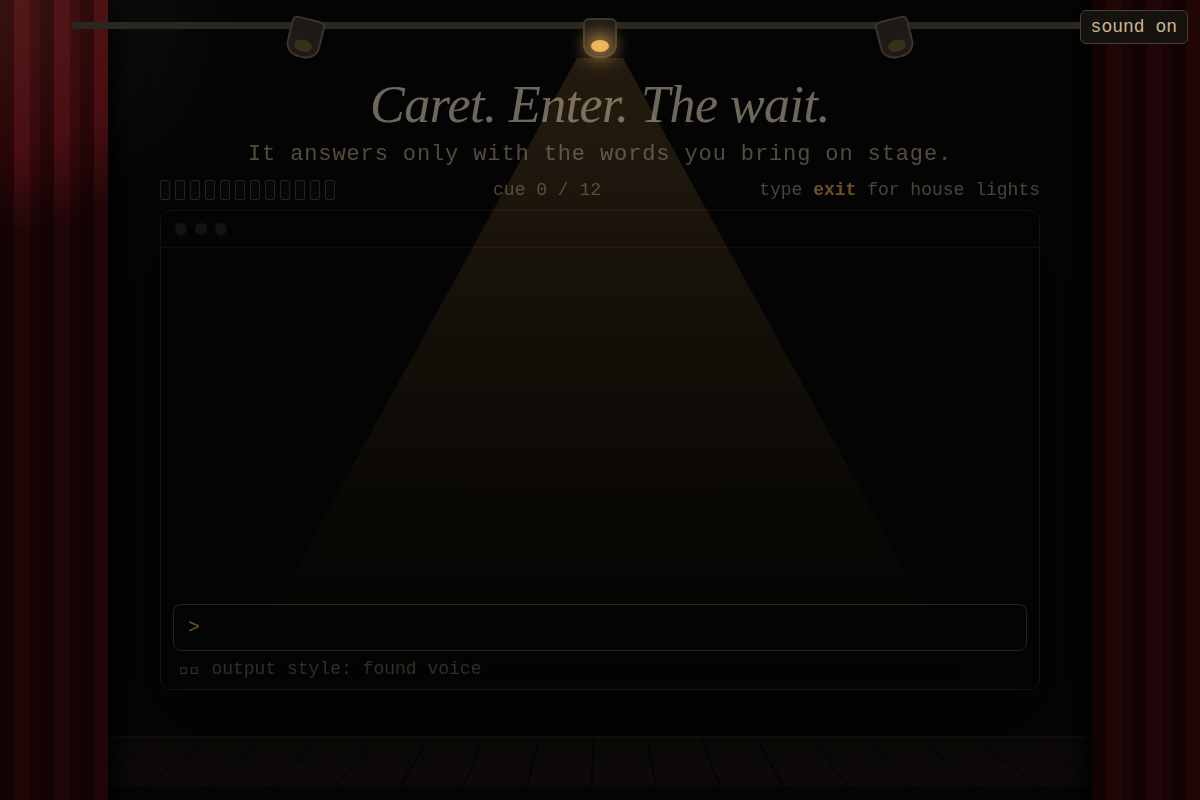
So: one kiln, one bowl. The page opens on the finished bowl first, grey, a ghost of the ending.
Every 30 seconds the loop wakes and slides the spyhole open. Orange, then yellow, then white.
The cones slump. The ghost fills in with colour.
Twelve minutes of firing. Then it cools, and you get the bowl you watched become itself.
2Textile designerAbsence Cloth
Check the brief's assumption: that someone is there when the loop wakes. Mostly nobody is.
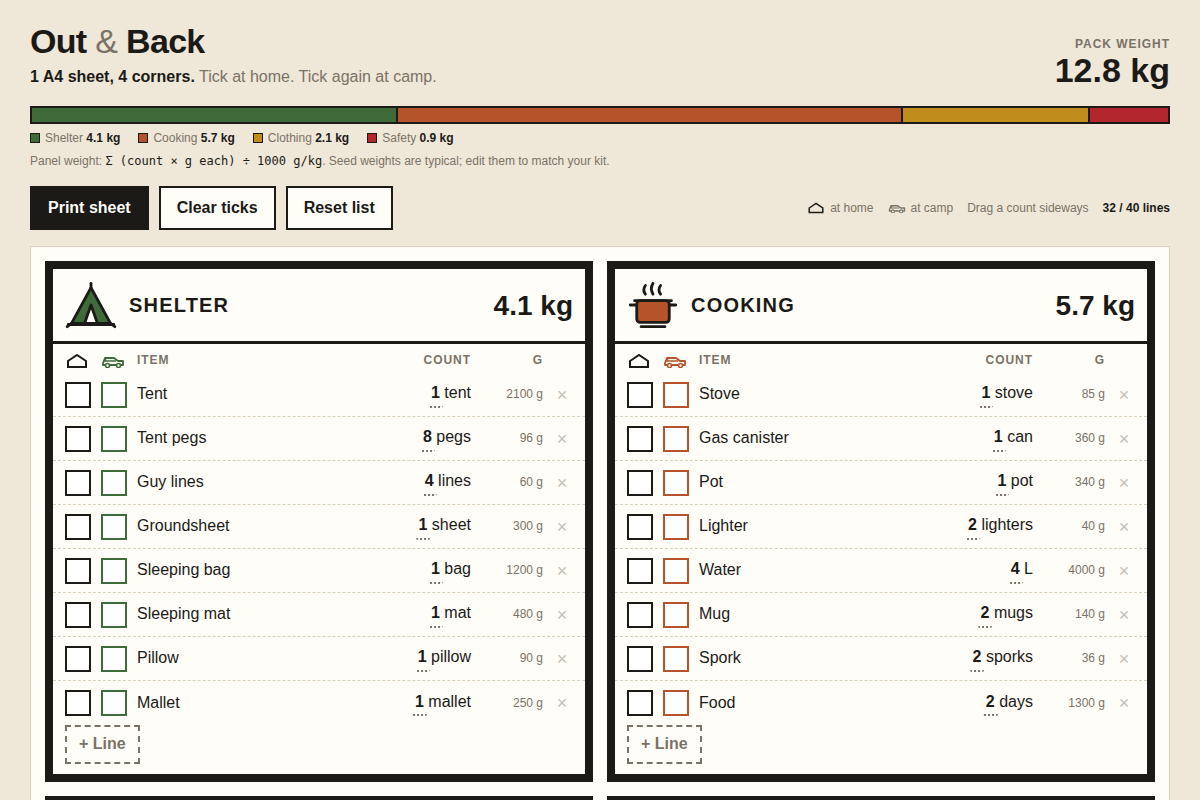
So a loom weaves one row per wake. Tab visible: a dark thread. Tab hidden: a pale one.
The cloth grows down the page while you're gone.
The person who comes back reads their own absence in stripes.
No buttons. You find it, you read it, that's all.
3Costume designerQuick Change
Backstage. A dresser in the wings with a rail of costumes.
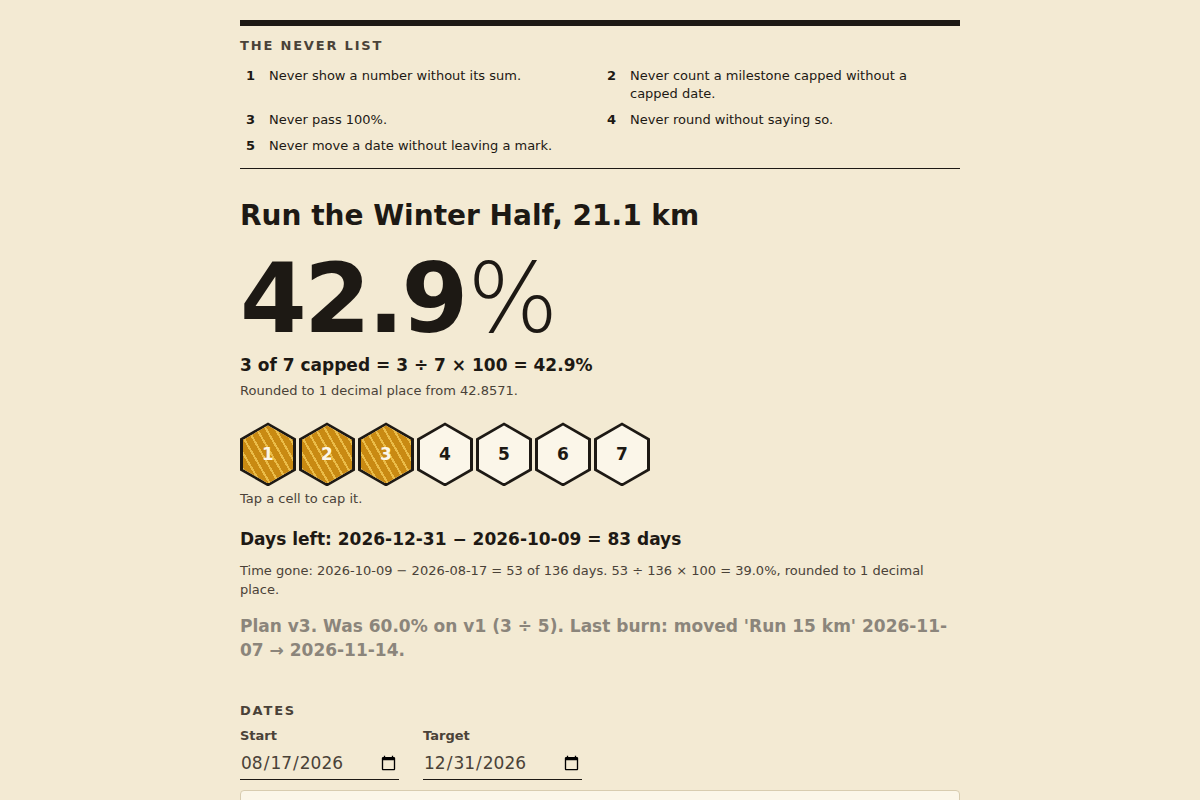
Every wake is a cue, and the whole page changes clothes: type, colour, period, everything.
Victorian at :00. Space opera at :30. Bare stage at :60.
The visitor is the actor. Tap the wings and you can stall the cue, or rush it.
The page never wears the same thing twice.
4Ada LovelaceCard Engine
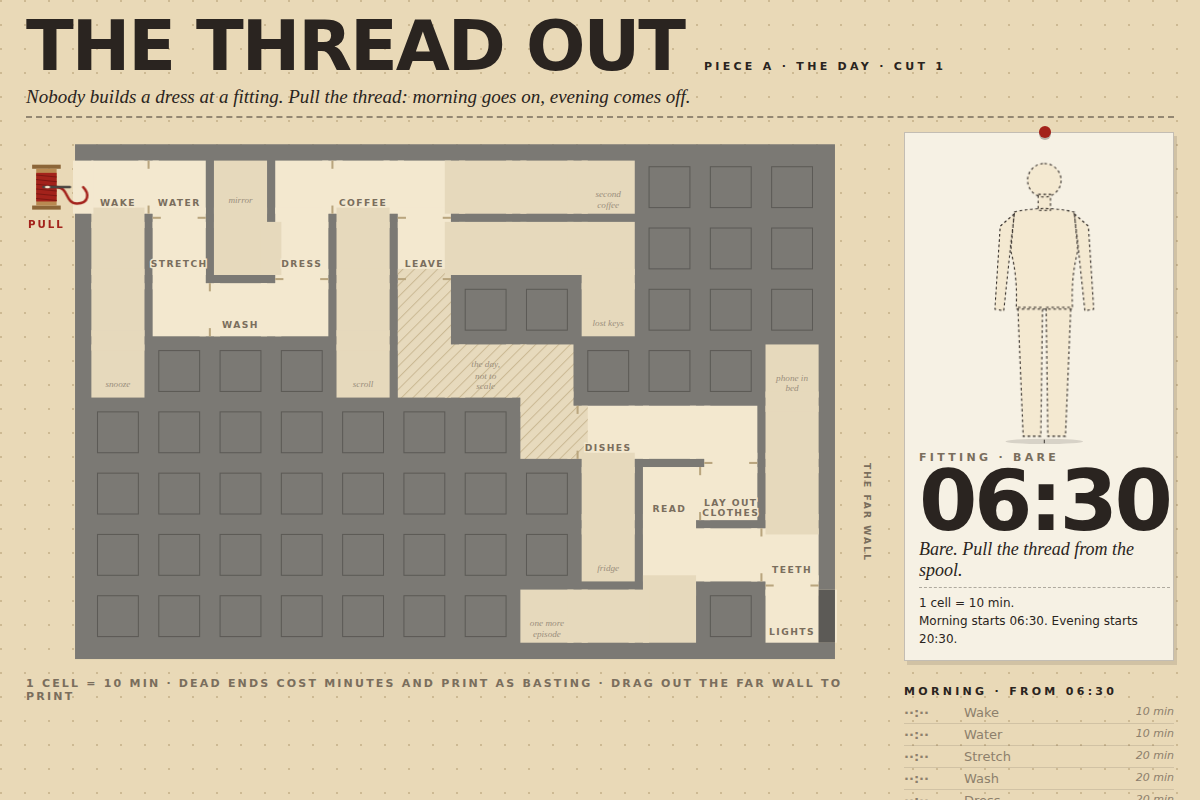
She would treat the loop as an engine that can do more than check. Each wake reads one punched card from a chain.
The visitor punches holes. The chain loops forever, and the readings become a sequence of notes.
The checking turns into a composition.
The chain is saved in local storage, so it runs the same tomorrow and next year, offline.
The page is a kiln that the loop checks through a spyhole every 30 seconds for twelve minutes, while the visitor waits, peeks early at the cost of cracks, and keeps the finished bowl, glazed with its own record of checks, on an offline shelf.
Costume designer lost on bowls leaving the page: the Ceramicist and Ada both wanted the work to stay where it can be found. Ada lost the music: she gave it up herself for a surface that lasts. The Textile designer's demand to label each crack with time and cause is still open, and no label ships in the first build.
 2026-10-15
 2026-10-14
 2026-10-13
 2026-10-12
 2026-10-11
 2026-10-10
 2026-10-09
 2026-10-08
 2026-10-07
 2026-10-06
 2026-10-05
 2026-10-04
 2026-10-03