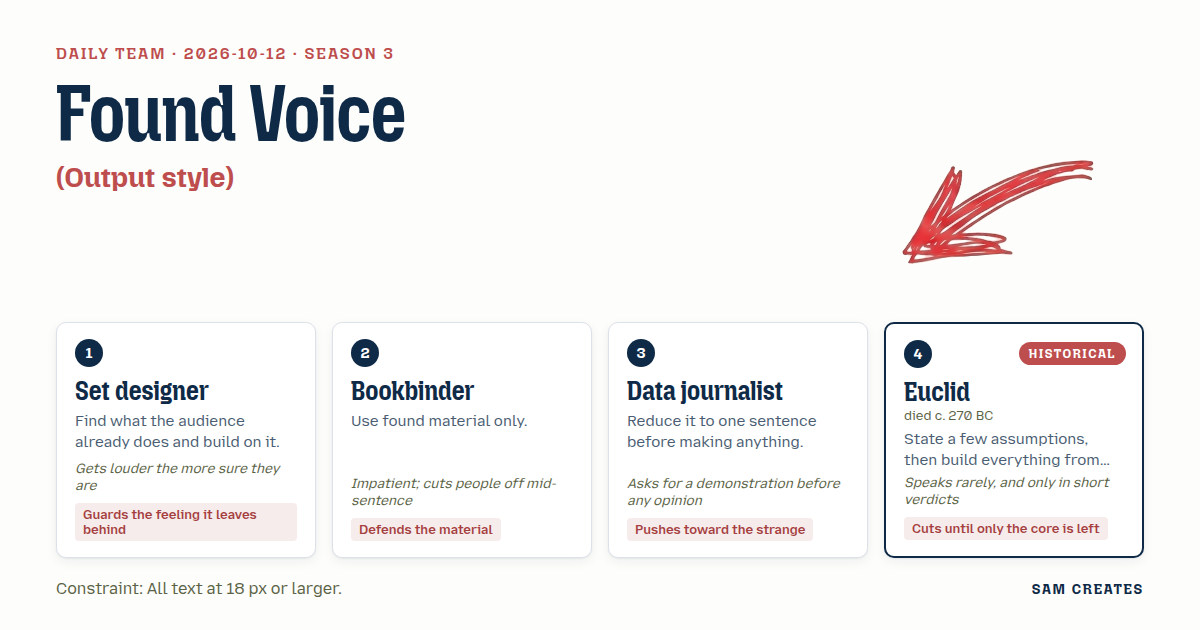
Output style: a Claude Code voice that changes how every answer sounds.
1Set designerHouse Lights
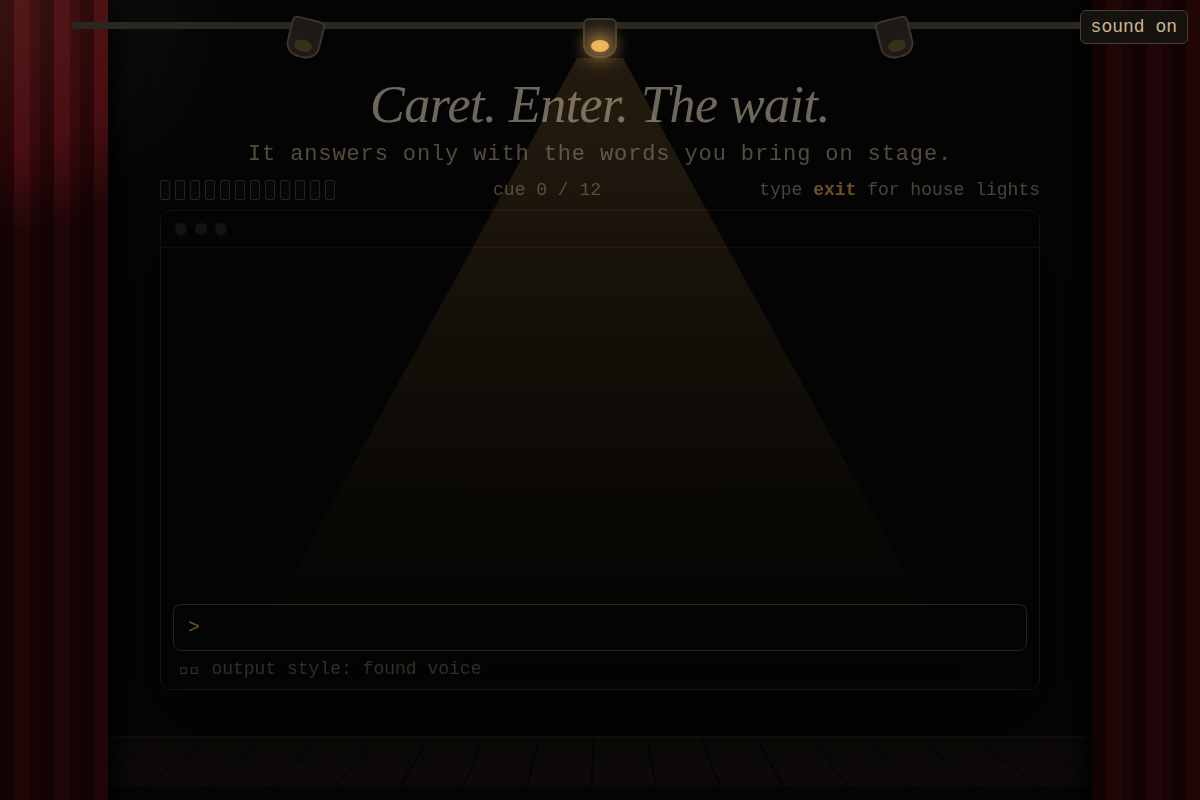
People already know the ritual. Caret blinks. They type. They hit Enter. They wait.
I keep all of that. What I change is the room the answer walks into.
The same answer, played under a different rig: one follow spot, a lit scrim, a bare work light.
The voice is the staging: pace, pauses, where the words stand on the boards.
When they leave, the house lights come up and the stage is a terminal again.
That last plain second is what they take home.
2BookbinderFound Voice
No new words. None.
The voice is sewn only from what the visitor has already typed: questions, typos, half-commands.
Each answer is cut from those scraps and gathered into a signature on the page.
At first it can barely speak. Ten questions in, it sounds like them.
The thread shows. The seams show. Type sizes don't match, and none are under 18 px.
A voice you fed yourself.
3Data journalistThe Trace
Every answer gets reduced to one sentence first. That sentence is all the voice says.
Under it runs a line like a seismograph: stress, pause, and length for each word.
Drag the line flat and the voice goes clipped. Spike it and the voice stalls and stretches.
The voice becomes a shape you edit by hand.
Show me a voice that isn't a rhythm.
4EuclidThree Givens
The visitor writes three rules for the voice. Nothing else is assumed.
Each answer is built step by step from those rules, and the steps stay on screen.
A rule that produces nothing gets struck out.
What remains is the voice.
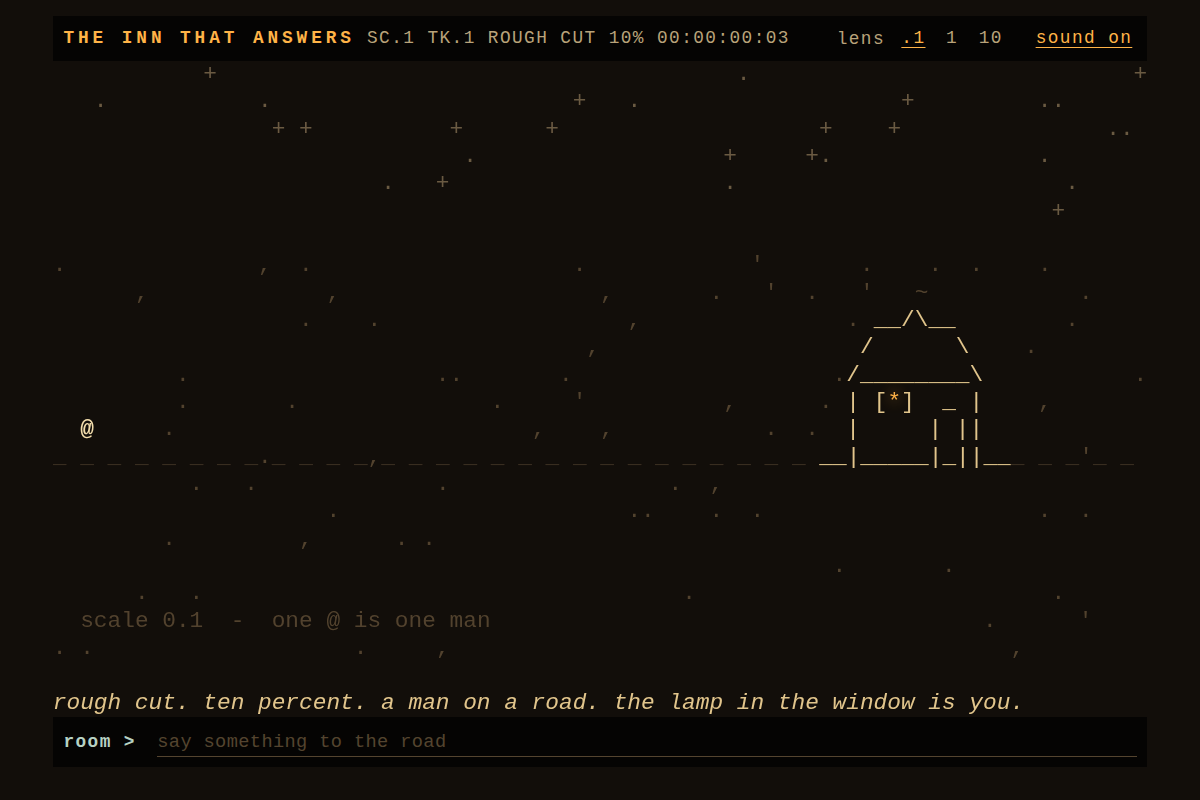
The page is a fake Claude Code terminal whose assistant can answer only with words the visitor has already typed, one sentence at a time, at a pace the visitor drags into shape, until the house lights come up on the whole stock of words they fed it.
 2026-10-15
 2026-10-14
 2026-10-13
 2026-10-12
 2026-10-11
 2026-10-10
 2026-10-09
 2026-10-08
 2026-10-07
 2026-10-06
 2026-10-05
 2026-10-04
 2026-10-03